Ngorongoro Crater – The Ultimate Wildlife Haven in Africa
Discover the breathtaking Ngorongoro Conservation Area, where UNESCO estimates reveal a staggering population of approximately 25,000 large mammals. This remarkable destination is a paradise for wildlife enthusiasts, showcasing the iconic Big Five: elephants, rhinos, lions, leopards, and buffalo. You’ll also encounter a plethora of fascinating African species, including hippos, zebras, antelopes, servals, and warthogs.
This vibrant ecosystem thrives within a compact area of just 260 km² (100 mi²), allowing safari-goers to experience the thrill of spotting new wildlife every 10 to 15 minutes. Such a wealth of biodiversity is one of the key reasons Ngorongoro is celebrated as a UNESCO World Heritage Site.
For birdwatchers, Ngorongoro is nothing short of a treasure trove, with over 600 species of birds waiting to be discovered. Immerse yourself in the stunning sights and sounds of this incredible environment, and witness the magic of one of Africa’s most captivating destinations!
Ngorongoro Crater is approximately 185 km from Arusha by road. The trip usually takes four hours.
Daily flights are offered from Arusha to Lake Manyara Airstrip. From there, it’ll take around a one-and-a-half-hour trip to the Ngorongoro Crater.
The Ngorongoro Crater, a UNESCO World Heritage Site located in Tanzania, is accessible to visitors throughout the year. However, for those seeking the optimal game-viewing experience, the dry season, which spans from June to October, is highly recommended. During these months, the skies are typically clear, enhancing visibility and allowing for better observation of the diverse wildlife that inhabits the crater.
The dry season presents unique advantages for wildlife viewing. As water sources become scarcer, animals are more likely to congregate around the remaining waterholes, making encounters with them more frequent and easier to spot. Additionally, the lack of foliage during this period provides unobstructed views of the vast landscapes and the remarkable variety of species, including the iconic “Big Five”: lions, leopards, elephants, buffalo, and rhinoceros, alongside numerous other animals.
Visiting the Ngorongoro Crater during this prime period not only maximizes the potential for thrilling wildlife sightings but also allows visitors to fully appreciate the stunning volcanic landscape and its rich biodiversity. Thus, planning a trip during the dry season can significantly enhance your overall experience in this remarkable natural wonder.
During a safari in Ngorongoro Crater, you can witness most of the iconic animals found in Tanzania. Many of these animals remain within the crater’s boundaries, where thousands of mammals coexist in a relatively small area. It is possible to observe nearly all the major savanna species in just one day.
In 2020, an estimated number of large mammals in Ngorongoro Crater was determined through research conducted by a team of scientists, including Patricia D. Moehlman and Joseph O. Ogutu. Their study, titled “Long-term Historical and Projected Herbivore Population Dynamics in Ngorongoro Crater, Tanzania,” offers detailed population estimates for the wildlife in the crater.
The count does not include small mammals such as servals, caracals, warthogs, and foxes. Researchers estimate that the total number of mammals in Ngorongoro is approximately 25,000. This number is not constant, as animals periodically move in and out of the crater.
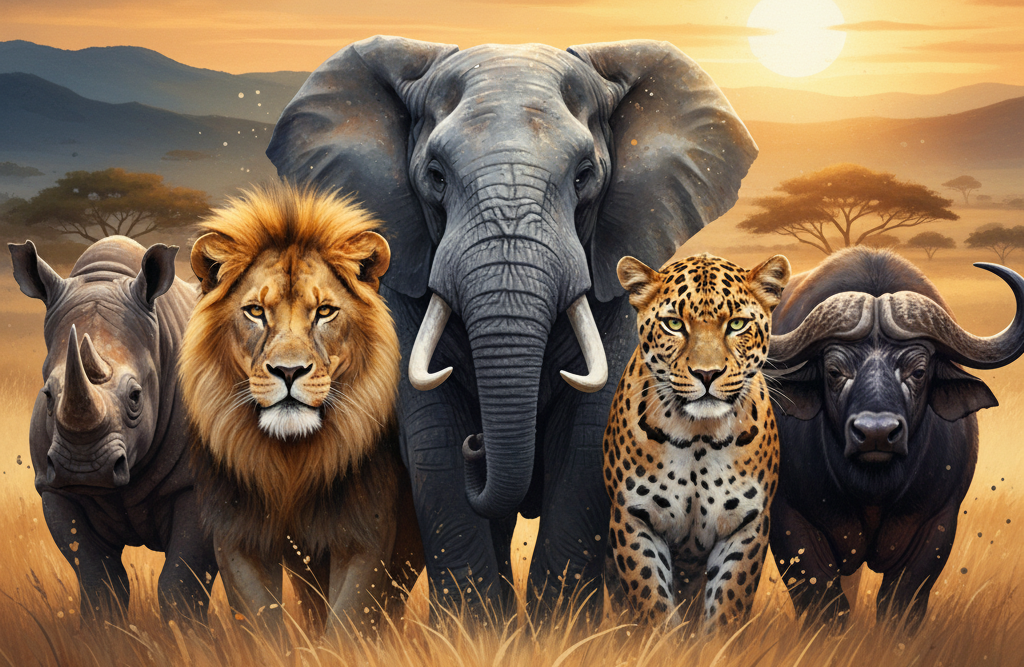
According to Philip Briggs, the esteemed author of Bradt’s comprehensive guide to African countries, Ngorongoro Crater stands out as the premier destination in Africa for observing the iconic Big Five animals: lions, elephants, buffalo, leopards, and rhinos. This unique region boasts the highest density of elephants, lions, and buffalo on the continent, making it a prime location for wildlife enthusiasts and photographers alike. Visitors have a higher chance of spotting the more elusive members of the Big Five—specifically, rhinos and leopards—in Ngorongoro compared to any other national park. However, it is important to note that sightings of these rarer creatures are not guaranteed on every game drive, as they tend to be more sporadic in nature.
Ngorongoro is one of the few wildlife reserves in Africa where the black rhinoceros population is successfully recovering. Today, there are about 30 of them, all residing in the crater. You can observe them on a safari with Altezza Travel. Unlike other animals, rhinos rarely come close to safari roads. For this reason, each safari vehicle is equipped with binoculars.
It is the world’s largest caldera that houses the BIG FIVE and other wildlife.
Ngorongoro Crater safari is among the best Safari destination in the African continent that hosts the annual Migration.
Dubbed as Garden of Eden, Ngorongoro Crater showcases stunning landscapes with 25,000 animals, including ungulates and other large mammals.
Enquire Online Complete a short form
Get Best Options Chat with our Safari Expert
Confirm & Pay Begin Your Unforgettable Safari
Often called the ‘Garden of Eden’—the Ngorongoro Crater is a true paradise for many animals. It is also essential for global biodiversity since it houses highly threatened species like rhinos.
On top of that, Ngorongoro also boasts a high concentration of animals and is deemed the world’s largest unfilled volcanic caldera
Ngorongoro was believed to have formed around 2.5 million years ago from a large active volcano whose cone had collapsed inwards after a major eruption.
This had left the present vast, unbroken caldera as its primary remnant.
Many animals in the Ngorongoro crater were trapped after descending and could never come out again due to the steepness of the slope, making them multiply within.
All the African Big Five can be viewed in Ngorongoro, like elephants, black rhinos, buffaloes, lions, and leopards.
Though all major animals are easily seen in the crater, giraffes aren’t one of them due to the crater’s steep descent.
Our team is always here to help