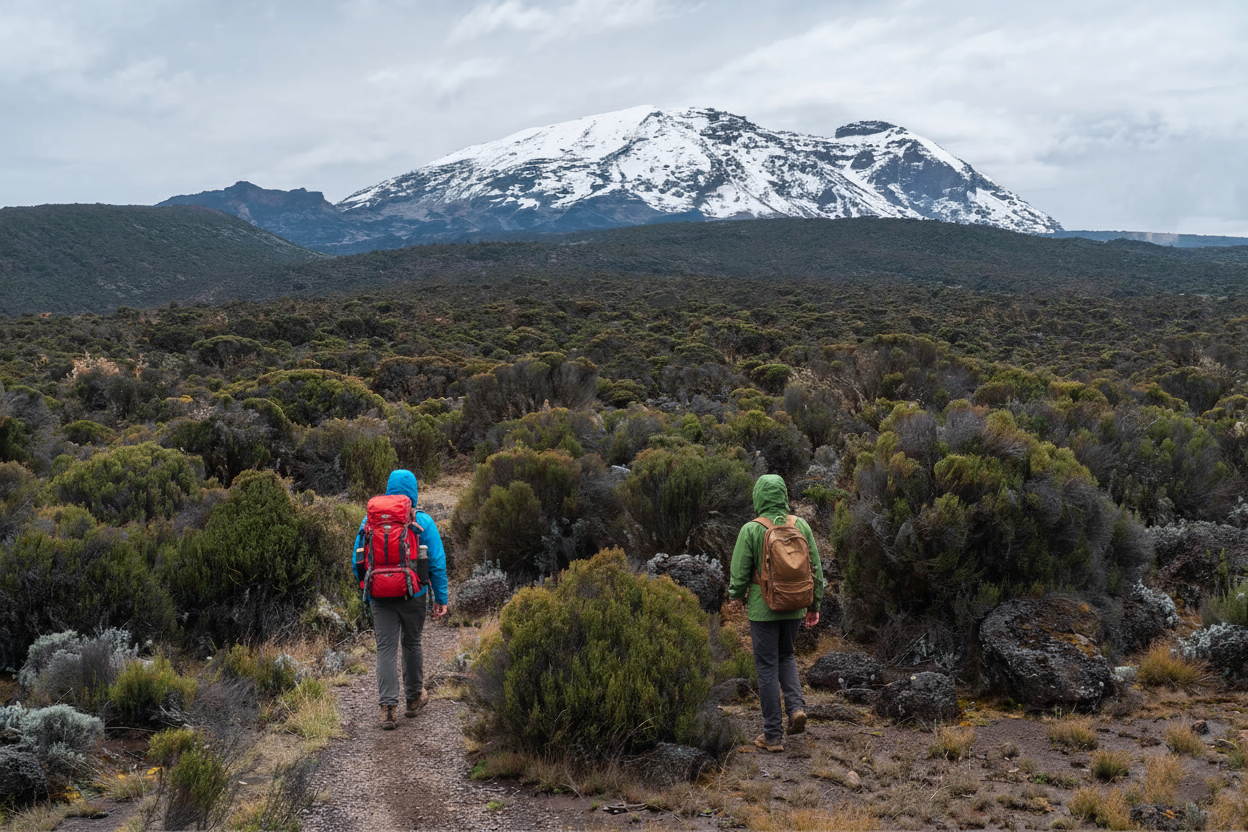
A guide and a mountain support crew will arrive at the hotel. Then you will travel by vehicle (roughly 3–4 hours) to Kilimanjaro National Park’s western entrance: Londorossi Gate. After the quick formality of acquiring climbing permits and registering with the search and rescue service, the group continues upwards towards their drop-off point by off-road vehicles (reaching 3,414 m / 11,200 ft). Here you can see stunning views of the Shira Plateau for the first time.
The route from your drop-off point to your first high-altitude camp, Shira 2, features a moderate gain in altitude and is not too physically challenging. Due to this, you will be able to properly begin the process of acclimatization. By the time you reach the camp, our professional mountain crew will have already prepared everything necessary, put up the tents, and begun preparing dinner.
PLEASE NOTE: This will be your first day at this altitude, so it is strongly recommended you heed the following instructions from this point on:
At night you may experience discomfort associated with acclimatization to the high altitude: because of a reduction in your breathing pattern at night, your body gets less oxygen than during the day. Taking altitude into account, you may therefore start feeling sick and experience a headache. Pay attention to your own body and tell your guide if you start feeling any symptoms of altitude sickness.
 Trekking time:
 Distance:
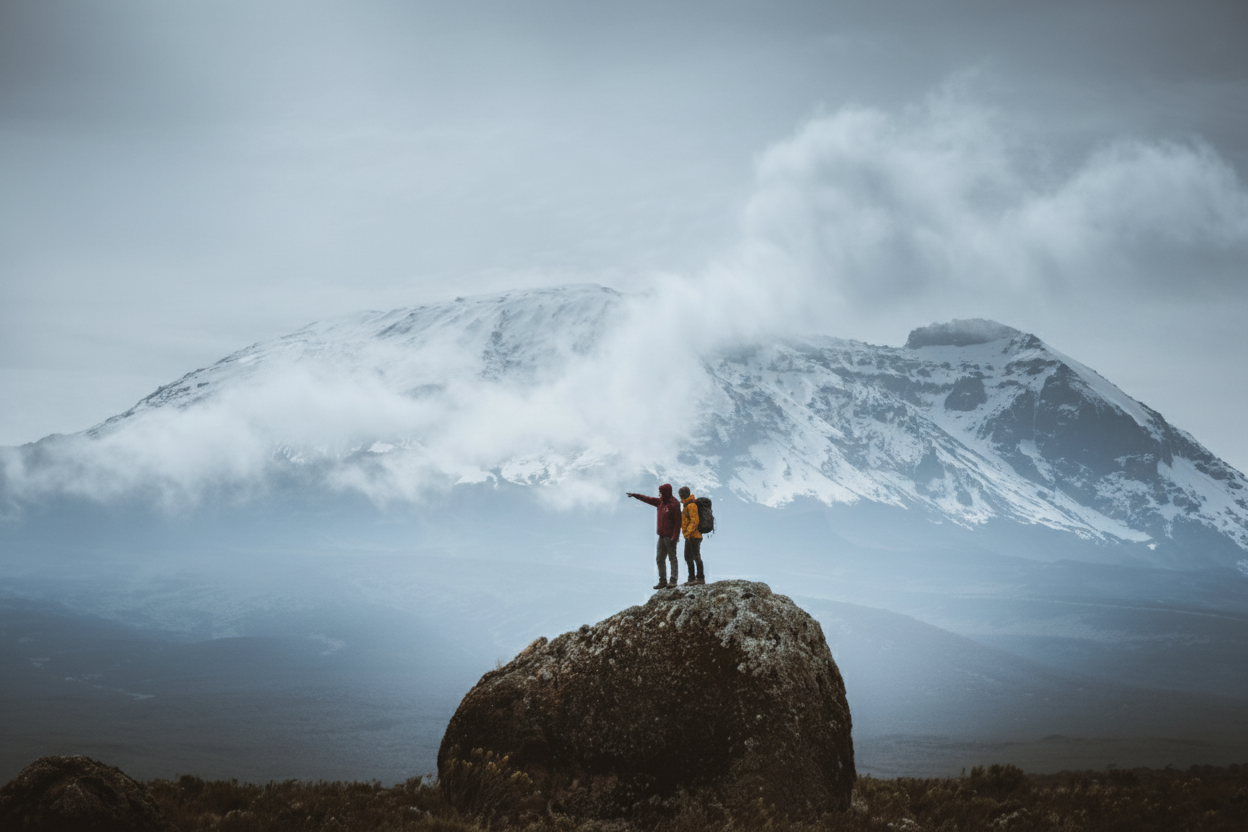
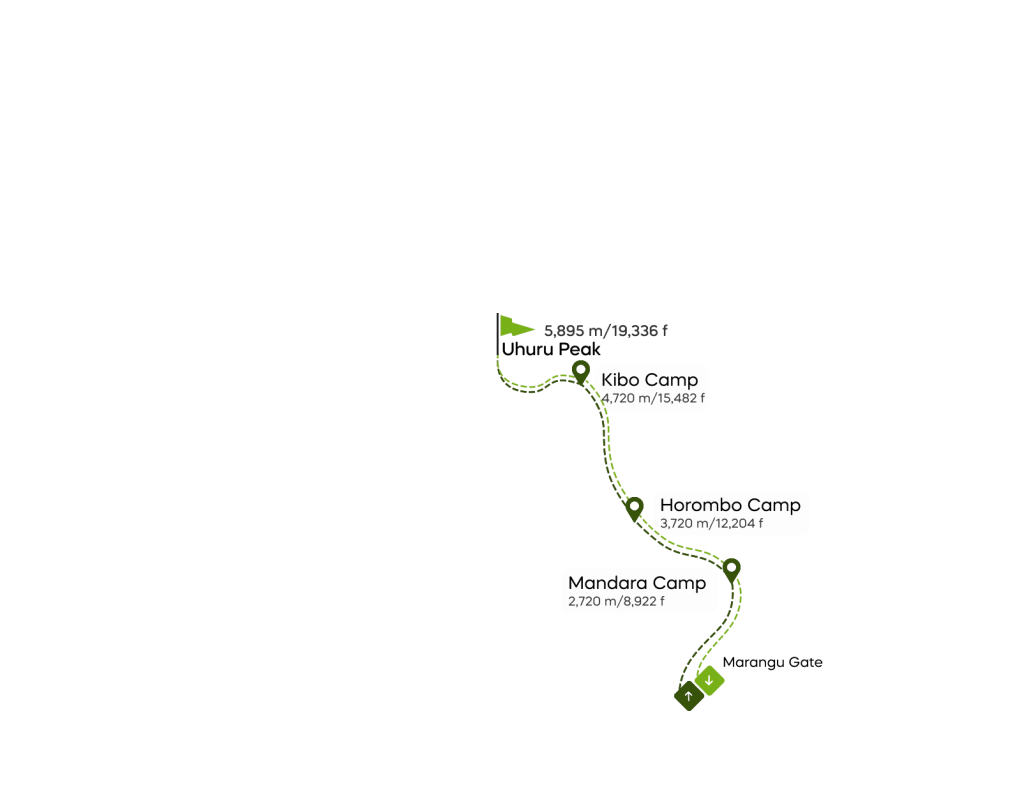
The group will wake up early to enjoy a hearty breakfast before departing from Mandara Hut. The trek will lead to the second high-altitude camp, Horombo Hut, situated at 3,720 meters (12,202 feet). Upon reaching the camp, you will be rewarded with stunning views of two volcanoes: Kibo and Mawenzi.
After lunch, you will embark on an acclimatization hike toward Kibo Hut, gaining an altitude of 200 meters (656 feet). Following the hike, you will return to Horombo Hut for dinner.
Please note: The acclimatization hike is a gentle trek with a slight increase in altitude designed to accelerate the acclimatization process. It is essential to take these hikes seriously, as they significantly enhance your chances of successfully summiting Kilimanjaro and help prevent altitude sickness.
 Change in Elevation:Hiking distance:Hiking time:Trekking time:Distance:
On this day, right after breakfast, the group will begin trekking to Kibo Hut, which is located at an elevation of 4,720 meters (15,482 feet). The trek itself is not very difficult, but it’s important to maintain a steady, appropriate pace to conserve your strength for the climb to Kilimanjaro’s summit. Once you reach the camp, lunch will be served. Afterward, we highly recommend that you rest as much as possible, avoid any strenuous activities, and drink plenty of water.
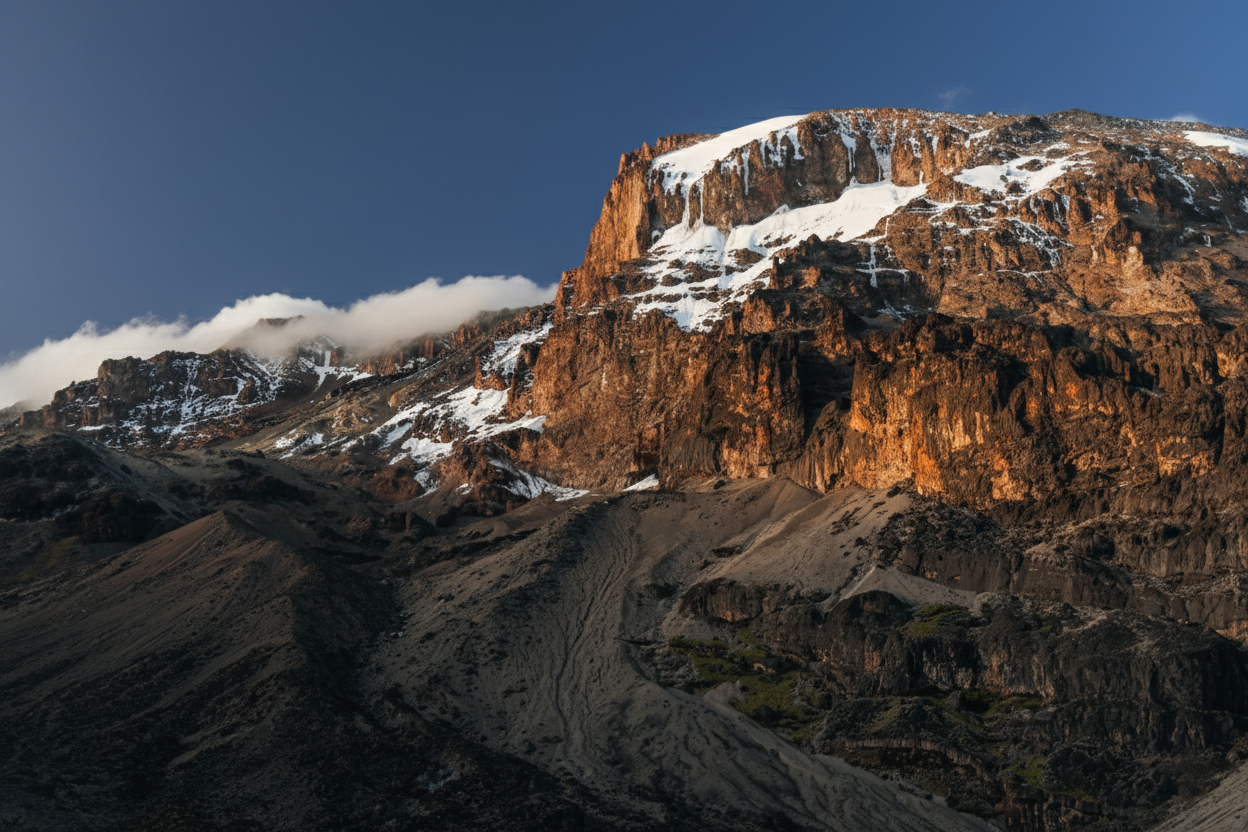
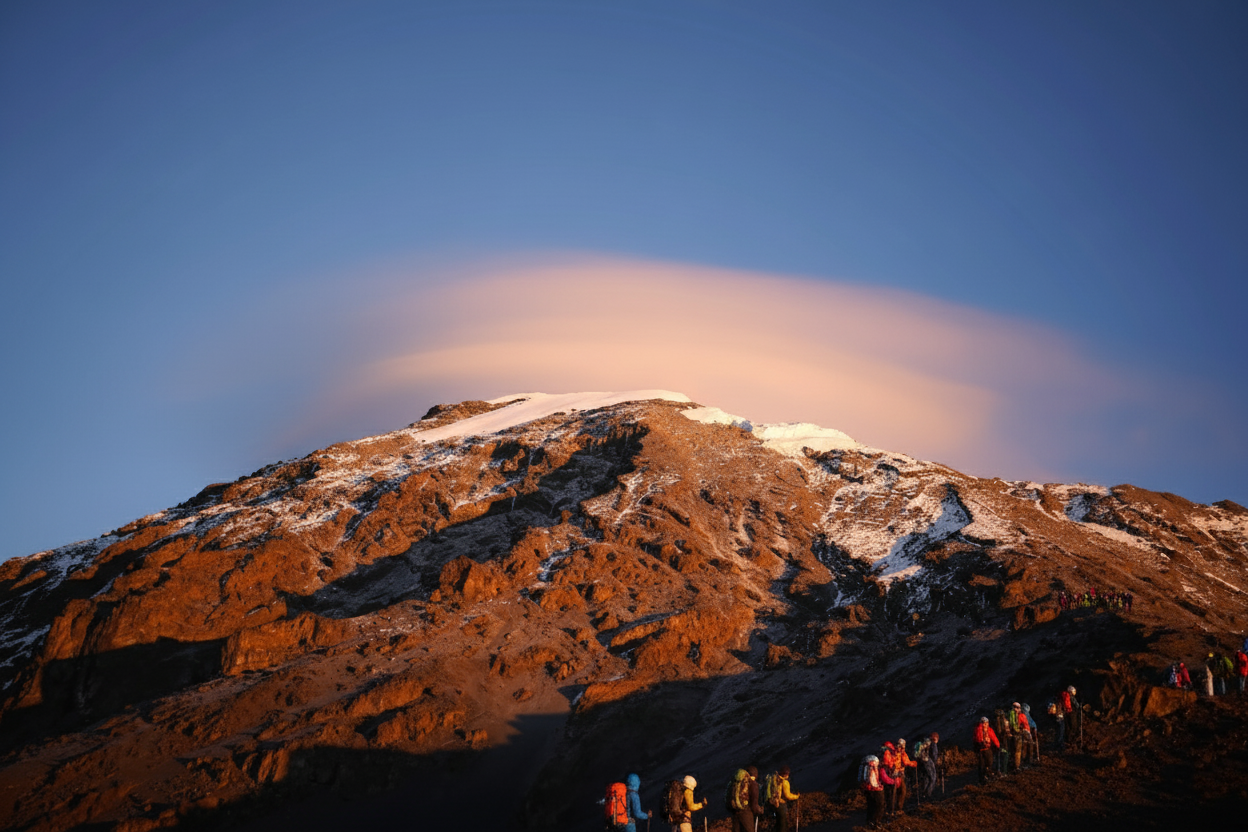
Trekking time:Distance:Your group will depart at night from Kibo Hut (4,720 m /15,482 f) and begin the trek to Kilimanjaro’s summit: Uhuru Peak (5,895 m /19,336 f). The trekking will be moderate from a technical standpoint, but the altitude presents a challenge, making even regular physical activity feel strenuous. For the entire length of the summit trek, each pair of climbers will be accompanied by their own guide, who will be monitoring the pair’s stamina and mental resolve. After your successful ascent to Uhuru Peak, you can descend to the nearest glacier if desired. Then you will return to Kibo Camp and enjoy a two-hour rest before continuing your descent to Horombo Hut (3,720 m /12,202 f).
PLEASE NOTE: Don’t forget that 90% of all accidents occur during the descent, including most broken arms and legs. Please pay attention to your feet, as there is a high risk of damaging your toenails.
Trekking time:Distance:You will be offered a warm breakfast in the morning, after which we will head for the Kilimanjaro National Park’s exit: Marangu Gate (1,970 m /6,462 f). After your descent, the whole group will gather to congratulate you, and then you will have the chance to share your opinions on the trip in the guestbook. Lastly, we will present you with your commemorative certificates and provide you with a transfer back to the hotel.
Trekking time:Distance:A guide and a mountain support crew will arrive at the hotel. Then you will travel by vehicle (roughly 3–4 hours) to Kilimanjaro National Park’s western entrance: Londorossi Gate. After the quick formality of acquiring climbing permits and registering with the search and rescue service, the group continues upwards towards their drop-off point by off-road vehicles (reaching 3,414 m / 11,200 ft). Here you can see stunning views of the Shira Plateau for the first time.
The route from your drop-off point to your first high-altitude camp, Shira 2, features a moderate gain in altitude and is not too physically challenging. Due to this, you will be able to properly begin the process of acclimatization. By the time you reach the camp, our professional mountain crew will have already prepared everything necessary, put up the tents, and begun preparing dinner.
PLEASE NOTE: This will be your first day at this altitude, so it is strongly recommended you heed the following instructions from this point on:
At night you may experience discomfort associated with acclimatization to the high altitude: because of a reduction in your breathing pattern at night, your body gets less oxygen than during the day. Taking altitude into account, you may therefore start feeling sick and experience a headache. Pay attention to your own body and tell your guide if you start feeling any symptoms of altitude sickness.
Trekking time:Distance:The group will wake up early to enjoy a hearty breakfast before departing from Mandara Hut. The trek will lead to the second high-altitude camp, Horombo Hut, situated at 3,720 meters (12,202 feet). Upon reaching the camp, you will be rewarded with stunning views of two volcanoes: Kibo and Mawenzi.
After lunch, you will embark on an acclimatization hike toward Kibo Hut, gaining an altitude of 200 meters (656 feet). Following the hike, you will return to Horombo Hut for dinner.
Please note: The acclimatization hike is a gentle trek with a slight increase in altitude designed to accelerate the acclimatization process. It is essential to take these hikes seriously, as they significantly enhance your chances of successfully summiting Kilimanjaro and help prevent altitude sickness.
Change in Elevation:Hiking distance:Hiking time:Trekking time:Distance:After breakfast, you will go on an acclimatization hike towards Kibo Hut and back to the camp.
Then, after lunch, you have the opportunity to walk around the surrounding area, take pictures of Mawenzi Volcano, or just sleep before the upcoming trek to Kibo Hut. To enhance your acclimatization transition, the team will spend this night at the very same altitude at Horombo Hut camp.
Change in Elevation:Hiking distance:Hiking time:On this day, right after breakfast, the group will begin trekking to Kibo Hut, which is located at an elevation of 4,720 meters (15,482 feet). The trek itself is not very difficult, but it’s important to maintain a steady, appropriate pace to conserve your strength for the climb to Kilimanjaro’s summit. Once you reach the camp, lunch will be served. Afterward, we highly recommend that you rest as much as possible, avoid any strenuous activities, and drink plenty of water.
Trekking time:Distance:Your group will depart at night from Kibo Hut (4,720 m /15,482 f) and begin the trek to Kilimanjaro’s summit: Uhuru Peak (5,895 m /19,336 f). The trekking will be moderate from a technical standpoint, but the altitude presents a challenge, making even regular physical activity feel strenuous. For the entire length of the summit trek, each pair of climbers will be accompanied by their own guide, who will be monitoring the pair’s stamina and mental resolve. After your successful ascent to Uhuru Peak, you can descend to the nearest glacier if desired. Then you will return to Kibo Camp and enjoy a two-hour rest before continuing your descent to Horombo Hut (3,720 m /12,202 f).
PLEASE NOTE: Don’t forget that 90% of all accidents occur during the descent, including most broken arms and legs. Please pay attention to your feet, as there is a high risk of damaging your toenails.
Trekking time:Distance:You will be offered a warm breakfast in the morning, after which we will head for the Kilimanjaro National Park’s exit: Marangu Gate (1,970 m /6,462 f). After your descent, the whole group will gather to congratulate you, and then you will have the chance to share your opinions on the trip in the guestbook. Lastly, we will present you with your commemorative certificates and provide you with a transfer back to the hotel.
Trekking time:Distance: