Ready for the adventure of a lifetime? Scaling Mount Kilimanjaro, Africa’s highest peak, begins with one crucial decision: choosing the perfect Kilimanjaro climbing route.
With eight distinct trails to the roof of Africa, your journey can be tailored to your exact trekking style. The Kilimanjaro climbing routes vary significantly, offering everything from breathtaking panoramic vistas and paths designed for smoother acclimatization, to the rustic comfort of sleeping huts or the quiet solitude of a trail less traveled.
Each option presents a unique blend of spectacular scenery, physical challenge, and overall experience. This guide will help you navigate the different Kilimanjaro climbing routes to select the perfect one for your unforgettable adventure.
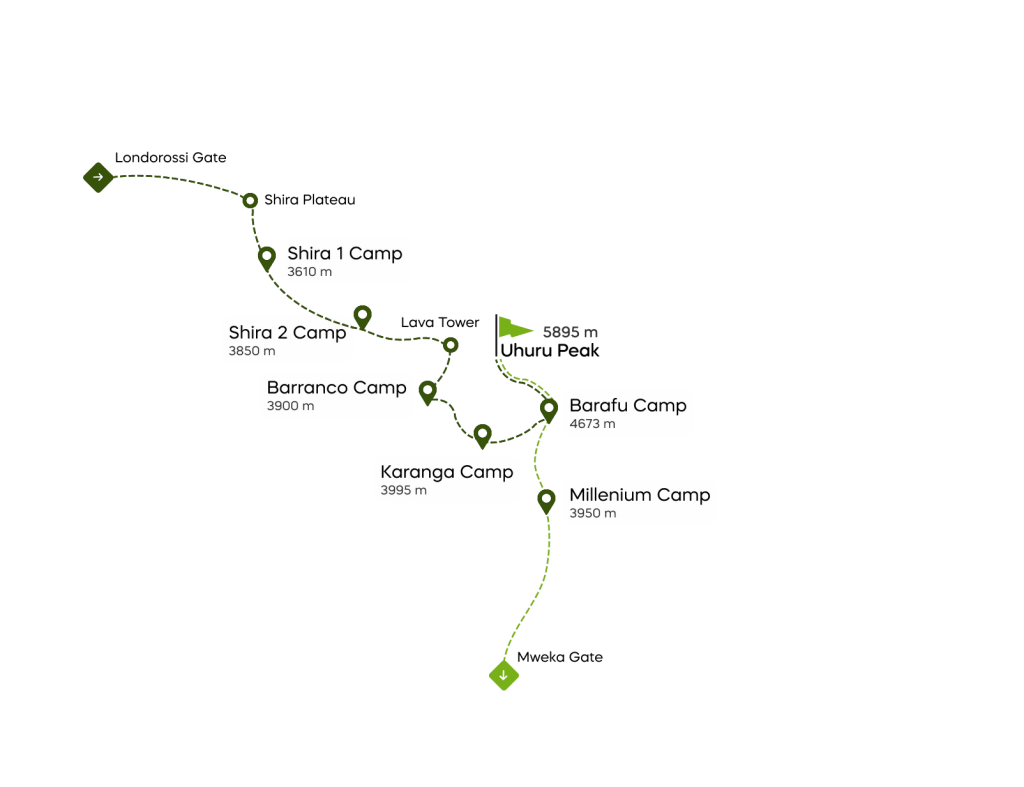
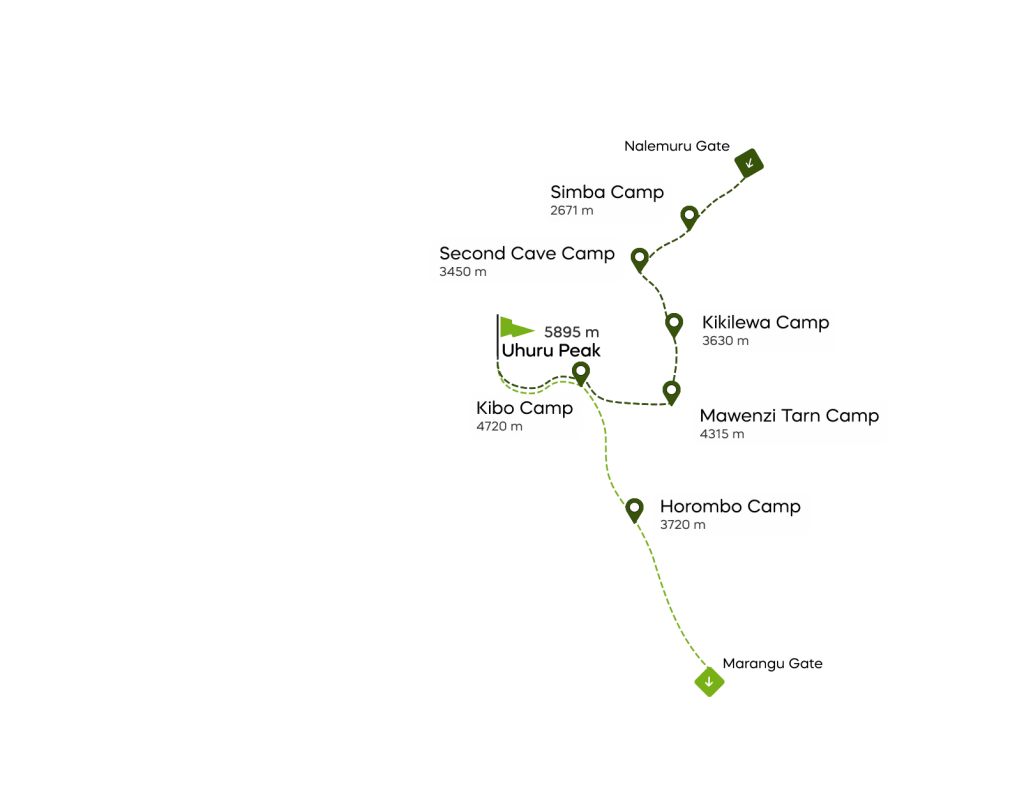
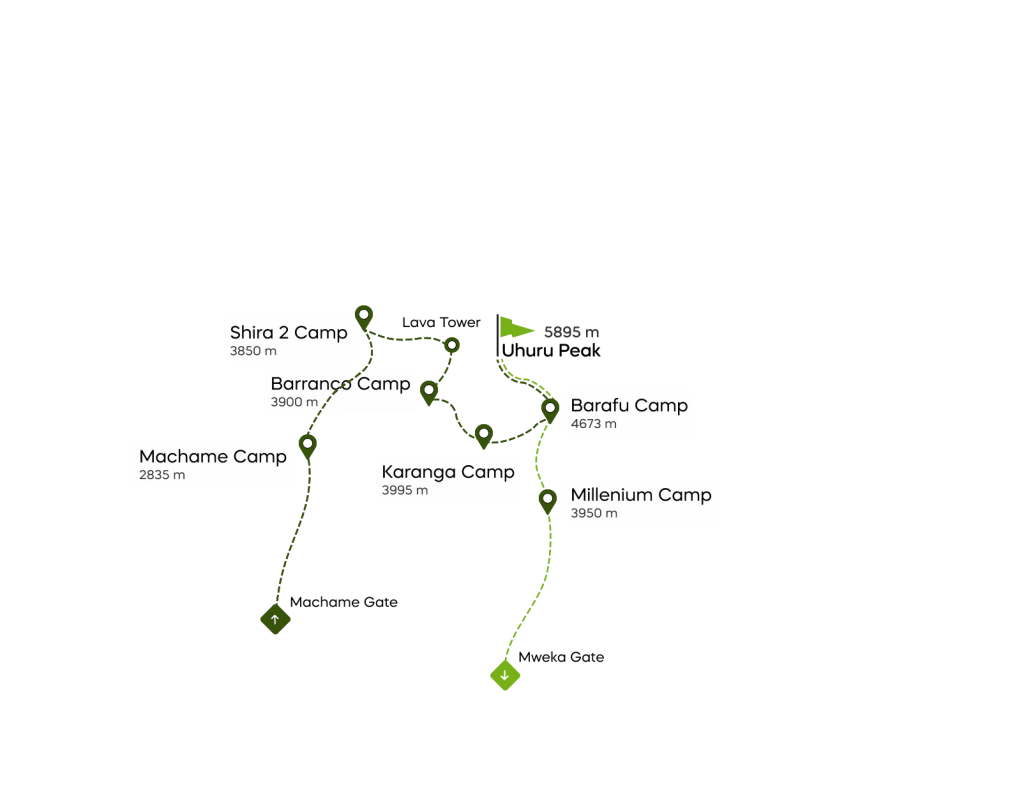
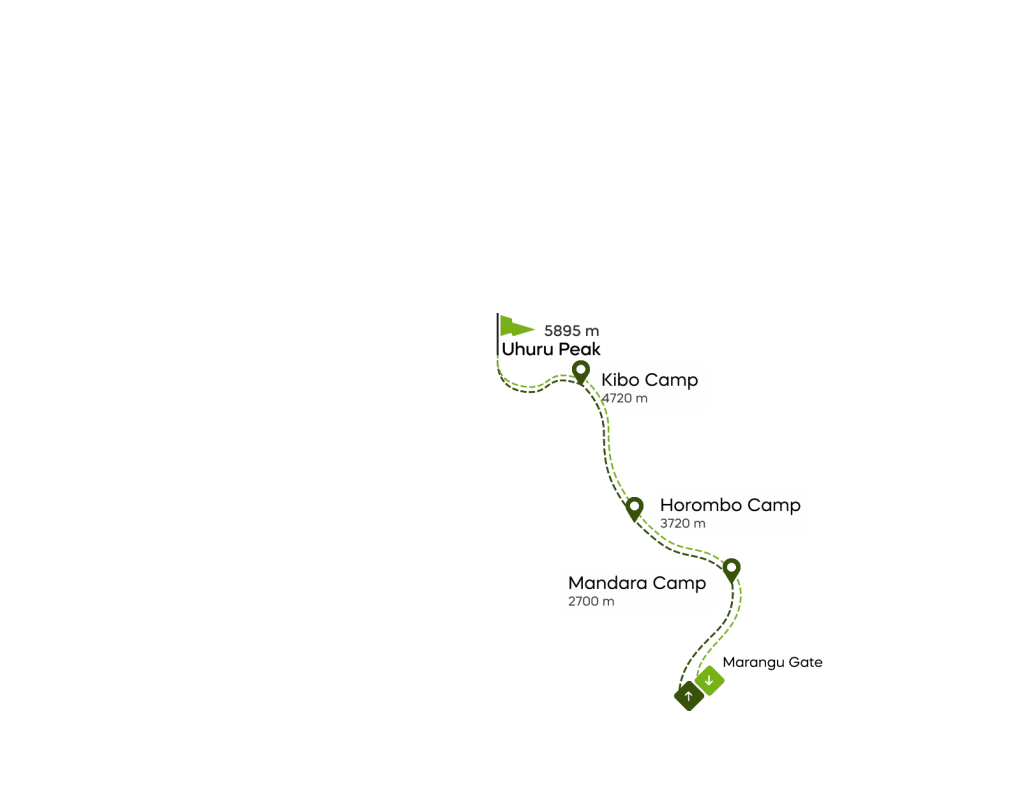
There are eight (8) main Kilimanjaro climbing routes to the summit of the “roof of Mt kilimanjaro”. Those are: Lemosho , Machame, Marangu, Rongai, Northern Circuit, Umbwe, Kilema, and Western Breach
There are various itineraries available for most routes, including 6, 7, and 8-day variations for the Lemosho route. Each of these options provides a different acclimatization profile. While choosing between a shorter and a longer itinerary may seem like a minor decision, longer itineraries often result
Enquire Online Complete a short form
Get Best Options Chat with our Safari Expert
Confirm & Pay Begin Your Unforgettable Safari
The Lemosho route has become the top choice for both the Roots & Routes Africa team and our clients. With its outstanding acclimatization profile, breathtaking views, and unparalleled success rate derived from our analytics over the past decade, it’s no wonder that Lemosho is highly sought after. However, as its popularity has surged, it now ranks among the three busiest routes on Kilimanjaro.
For those seeking a more intimate adventure, we highly recommend the 7-day Rongai route itinerary. While it may lack the dramatic scenery and unique flora, such as the Dendrosenecio kilimanjari, it offers an incredible experience with more than ten times fewer climbers than the most frequented paths. Choose Rongai for a serene and private trek that allows you to fully immerse yourself in the majestic beauty of Kilimanjaro.
Lemosho route is the favorite of the Team and our clients. Lemosho offers a great acclimatization profile, scenic views, and the highest success rate according to our analytics for the last 10 years. However, this beautiful Kilimanjaro route has gained a lot of popularity in recent years and now it’s in the top 3 most busy routes. If you’re looking for a more private experience, consider the 7-day Rongai route itinerary. While not as scenic and lacking impressive fauna like Dendrosenecio kilimanjari, it’s more than 10 times less crowded than the popular routes.
The main challenge on Mount Kilimanjaro is not the steep slopes or long daily hikes, but rather the altitude. Therefore, itineraries that provide the best acclimatization profiles can be considered the “easiest.” Notably, the Lemosho 7-8 day routes and the Rongai 7-day route stand out, followed closely by the Machame 7-day and Northern Circuit routes.
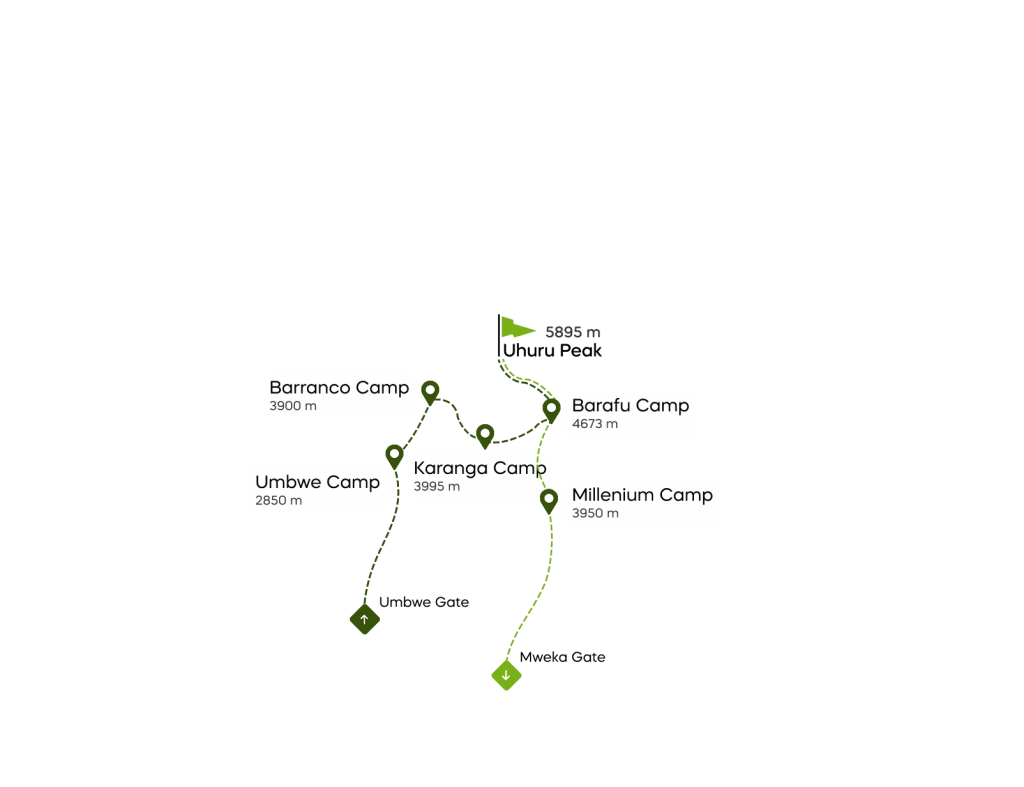
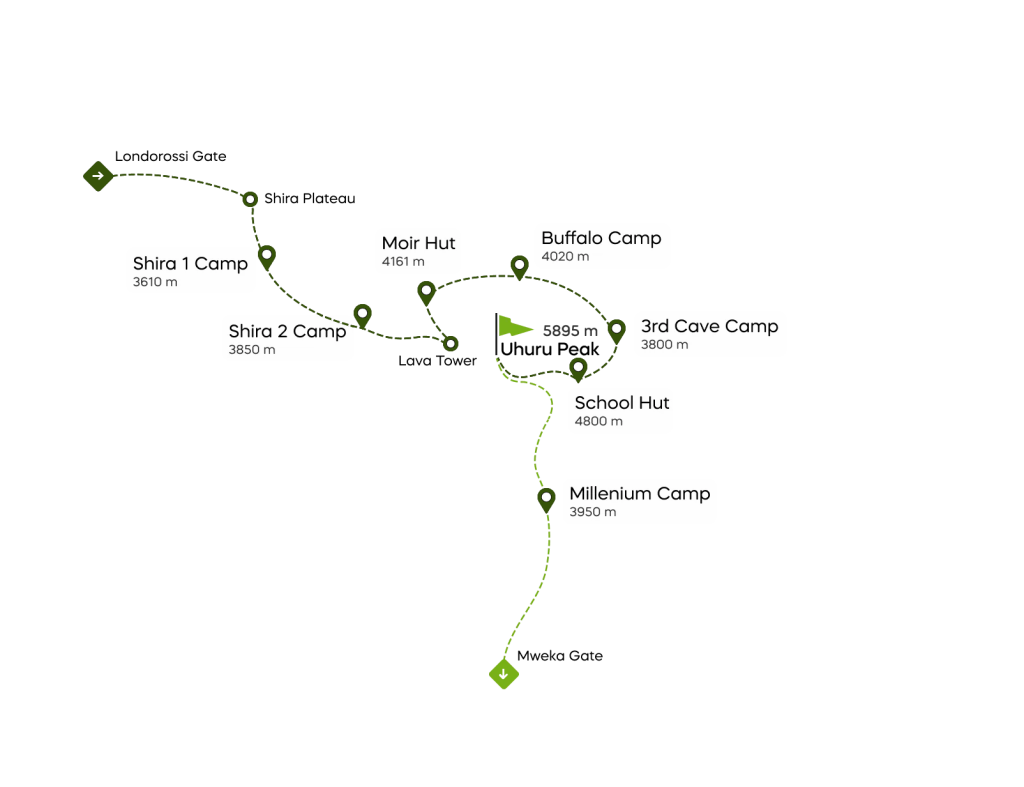
The Lemosho route’s 7-day itinerary is the most accessible option on Mount Kilimanjaro for several reasons. It starts at an elevation of 3,500 meters, which eliminates the need to ascend to that altitude during the trek. The shorter initial daily hikes help prevent overexertion, allowing your body to focus on adapting to the altitude. All overnight stays are at 3,500 meters or above, further enhancing acclimatization. Moreover, the route from Barafu Camp to the summit is the shortest, saving about an hour of travel time.
The Northern Circuit offers excellent acclimatization over several days on the mountain, but it is better suited to hikers prepared for longer daily treks. For beginners, the Lemosho, Rongai, and Machame routes might be easier options with a higher chance of reaching the summit. If you feel you need additional time for rest and acclimatization, you can add an extra acclimatization day at any of the camps to your itinerary.
According to our statistics, the 7- and 8-day Lemosho routes have the highest summit success rates, approximately 98%. The vast majority of climbers who choose these Lemosho itineraries successfully reach the summit. Why is this the case? The answer is straightforward: these routes offer an excellent acclimatization profile, numerous opportunities for “climb high, sleep low,” and sufficient time at altitude for climbers to adjust gradually. It’s worth noting that most itineraries lasting 7 days or longer on the mountain also demonstrate high summit success rates.
However, summit success rates can vary significantly between different operators. Budget tour companies may employ inexperienced guides and provide inadequate equipment, which can diminish your chances of safely reaching Uhuru Peak. While they often advertise summit success rates of over 95%, the actual rates tend to be much lower.
In contrast, a reputable operator will strive to enhance your chances of successfully summiting while ensuring you enjoy every aspect of the experience. We are committed to excellence, with proven success rates of up to 98% on routes like the 7- and 8-day Lemosho.
Since altitude-related conditions are the primary concern, all routes with solid acclimatization profiles can generally be considered safe. However, the key factor in ensuring a successful expedition is the professionalism of your guides and the overall organization of your trek. At Roots & Routes Africa, our guides possess extensive experience, are trained as Wilderness First Responders, and are equipped with comprehensive medical kits and oxygen tanks. We have more oxygen systems than all other operators combined, ensuring our trekkers are well-prepared.
Your guides will conduct health checks twice daily to monitor for signs of altitude sickness and promptly address any concerns that arise. In the rare event of a more serious situation, they are trained to provide efficient first aid and facilitate effective evacuation.
It’s important to note that the Western Breach is considered the only truly dangerous route, posing risks of rockfalls that have resulted in numerous tragedies. As recently as October 2023, the Roots & Routes Africa team discovered the body of a climber who attempted this route independently or with another operator. As a result, we strongly advise most trekkers against attempting the Western Breach. Your safety is our utmost priority.
Budget tour operators frequently offer two main Kilimanjaro trekking routes: the 5-day Marangu route and the 6-day Machame route. These options necessitate fewer climbing crew members and supplies, resulting in lower park fees. This makes them more affordable, which attracts many hikers.
However, these itineraries pose considerable challenges when it comes to acclimatization. Both routes lack an important rest day in the middle of the trek, which is vital for proper adjustment to higher altitudes. Consequently, hikers ascend to higher elevations without sufficient time to rest and acclimatize, which can lead to altitude-related problems.
Our team is always here to help