Standing at 5,895 meters (19,341 feet), Mount Kilimanjaro is the highest free-standing mountain on the globe and the undisputed “Roof of Africa.” It’s one of the planet’s most sought-after adventures, offering a breathtaking trek that doesn’t demand technical mountaineering skills. To reach the summit, you don’t need to be an expert climber, you just need a solid level of fitness and the right preparation.
This guide is designed to walk you through everything a beginner needs to know for a successful and unforgettable journey up Kilimanjaro.
Yes, Kilimanjaro is absolutely achievable for beginners. The greatest challenge isn’t the technicality of the hike, but rather how your body adapts to the high altitude. The single most important factor for success is proper acclimatisation, giving your body enough time to adjust to the decreasing oxygen levels.
The best way to ensure this is by choosing a route that is 7-8 days long. This slower pace dramatically increases your chances of reaching the summit comfortably and safely. Your success will depend on three key things: choosing a longer route, selecting a reputable and experienced tour operator, and diligently following the safety advice of your guides.
While there are several paths to the top, some offer a much higher chance of success due to their longer, more gradual ascent profiles. Routes like the Lemosho, Machame, Rongai, and the Northern Circuit are highly recommended.
The most popular and ideal times for climbing Kilimanjaro are during the two dry seasons: late December to early March and mid-June to late October. During these periods, you can expect clear skies and pleasant weather conditions.
However, climbing is possible year-round. While other months are considered the “rainy season,” this doesn’t mean constant downpours. Typically, rain showers occur in the afternoon, leaving the mornings clear for trekking. Many days during the rainy season see no rain at all, offering a quieter, more serene experience on the mountain.
As of 2025, you can expect a safe, well-organized 7-day group climb to cost approximately $2,900. Shorter 6-day trips or those with seasonal discounts may be found for around $2,300-$2,500.
It’s important to understand that a large portion of this cost—about 35%—goes directly to mandatory park conservation fees. Be cautious of companies offering prices significantly below this range. Extremely low costs are often a sign that corners are being cut, particularly with porter welfare. Budget operators may underpay and poorly equip their staff, which compromises not only the porters’ well-being but also the safety and success of the entire expedition.
A good, moderate level of fitness is all you need to comfortably tackle the trek. As a benchmark, you should be able to jog for 5 km (3 miles) continuously or hike for a day covering about 10 km (6 miles).
The best training activities to prepare your body include:
Focus on building cardiovascular endurance and strengthening your legs in the months leading up to your trip.
The primary risk on the mountain is Acute Mountain Sickness (AMS), which is caused by ascending too quickly. In rare, severe cases, AMS can progress to life-threatening conditions like cerebral or pulmonary edema.
Thankfully, AMS is highly preventable. The keys to safe acclimatization are:
Choose a Longer Itinerary: Select a route that is 7 days or longer.
Walk Slowly: Follow your guides’ mantra of “pole pole” (slowly, slowly).
Stay Hydrated: Drink plenty of water throughout the day.
Trust Your Guides: Your guides are experts in high-altitude environments. Choose an operator whose guides are certified Wilderness First Responders (WFR), as they are trained to recognise and manage AMS and handle any potential emergencies.
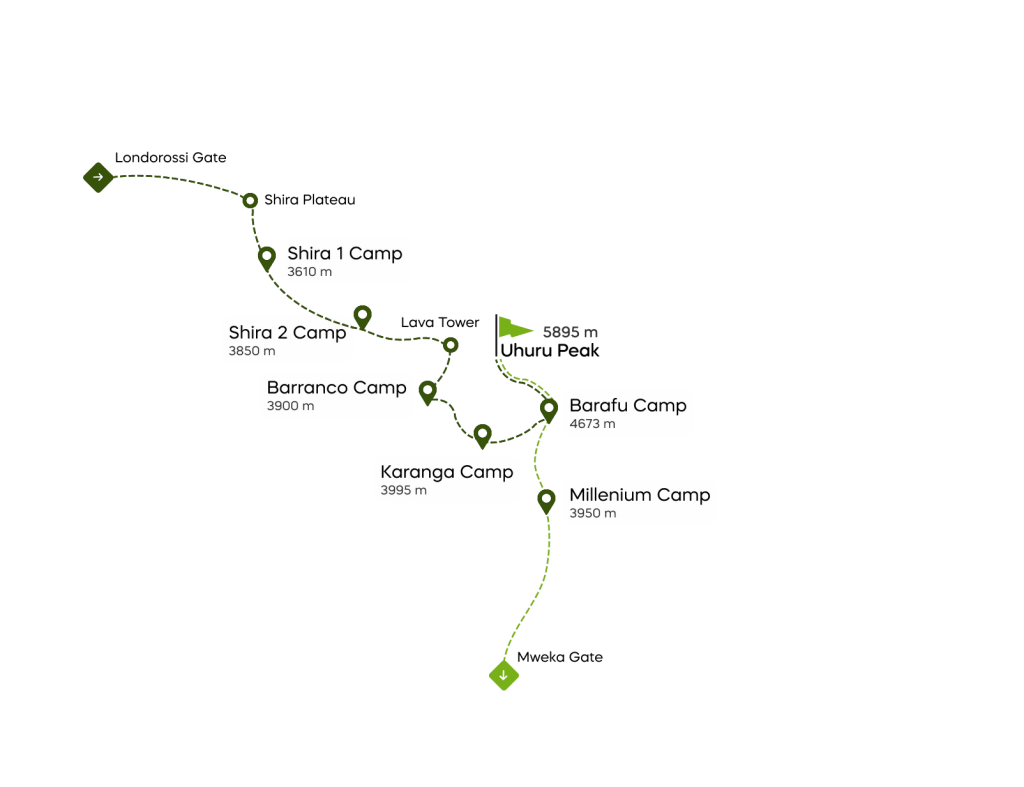
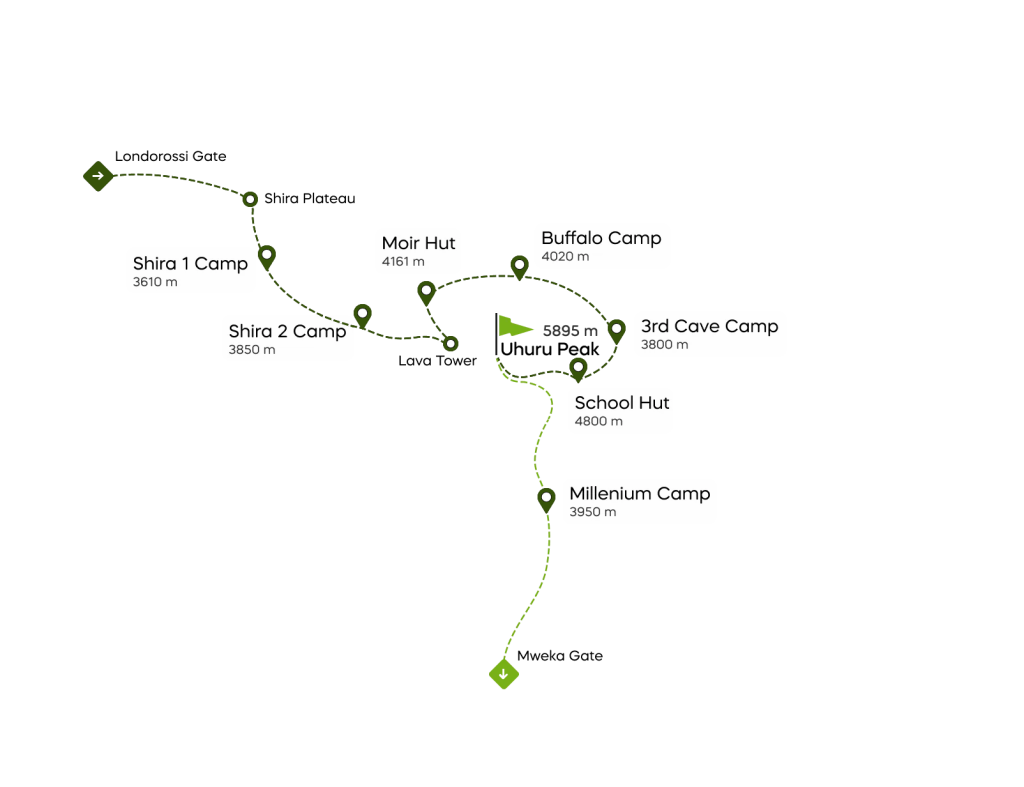
Starting from the western slope, the Lemosho route is famous for its breathtaking views and effective acclimatisation process.
It features 6- to 8-day trekking options, joining the Machame route around Lava Tower. The 6- and 7-day itineraries start with a drop-off at a high elevation, which aids in acclimatisation.
Advantages: Excellent summit success rate thanks to the gradual ascent; it crosses the beautiful Shira Plateau.
Disadvantages: Can be crowded during peak seasons tends to be more expensive.
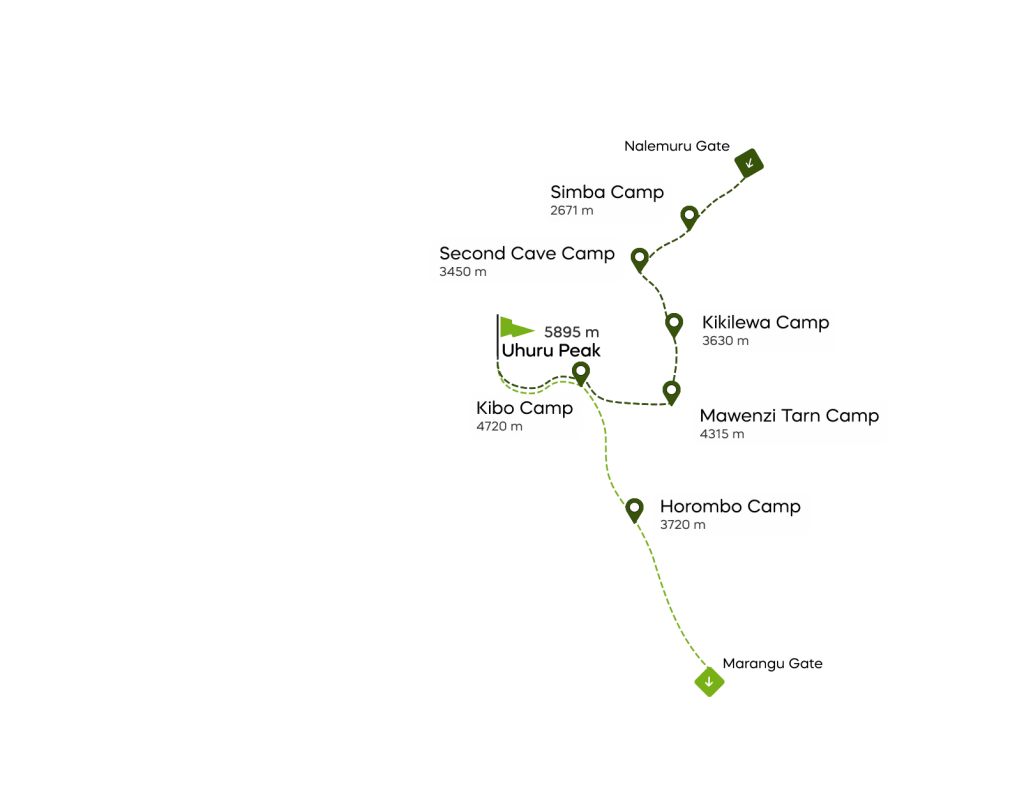
When coming from the north, Rongai provides a less crowded and drier experience, offering 6- or 7-day trekking options. It’s a dependable choice for climbs during the rainy season.
Advantages: Reduced rainfall and a smaller number of trekkers; varied landscapes featuring coniferous forests.
Disadvantages: A lengthier journey to the trailhead, the 6-day option might not allow sufficient acclimatisation.
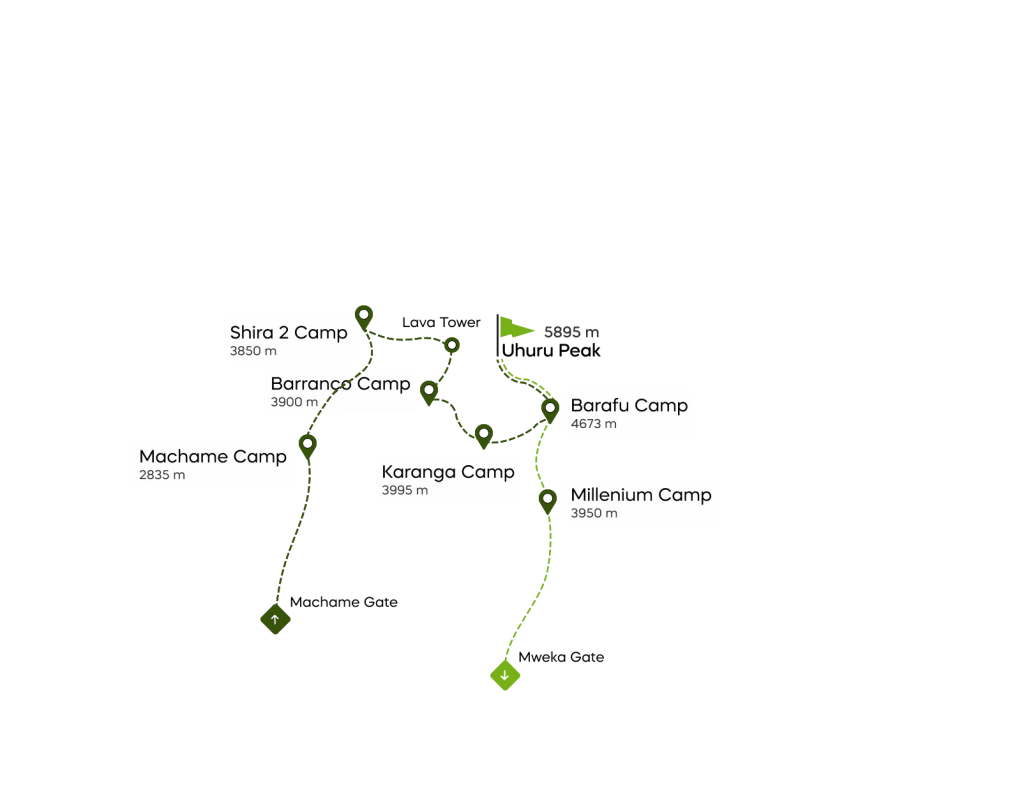
Referred to as the ‘Whiskey Route,’ Machame is well-liked for its picturesque diversity, crossing through various terrains from rainforest to alpine desert. It provides 6- or 7-day trekking options, with the longer duration allowing for significantly better acclimatization.
Advantages: Highly picturesque with varied terrains, favorable acclimatization profile for extended itineraries.
Disadvantages: It can become busy during peak times; the 6-day option provides less time for acclimatization.
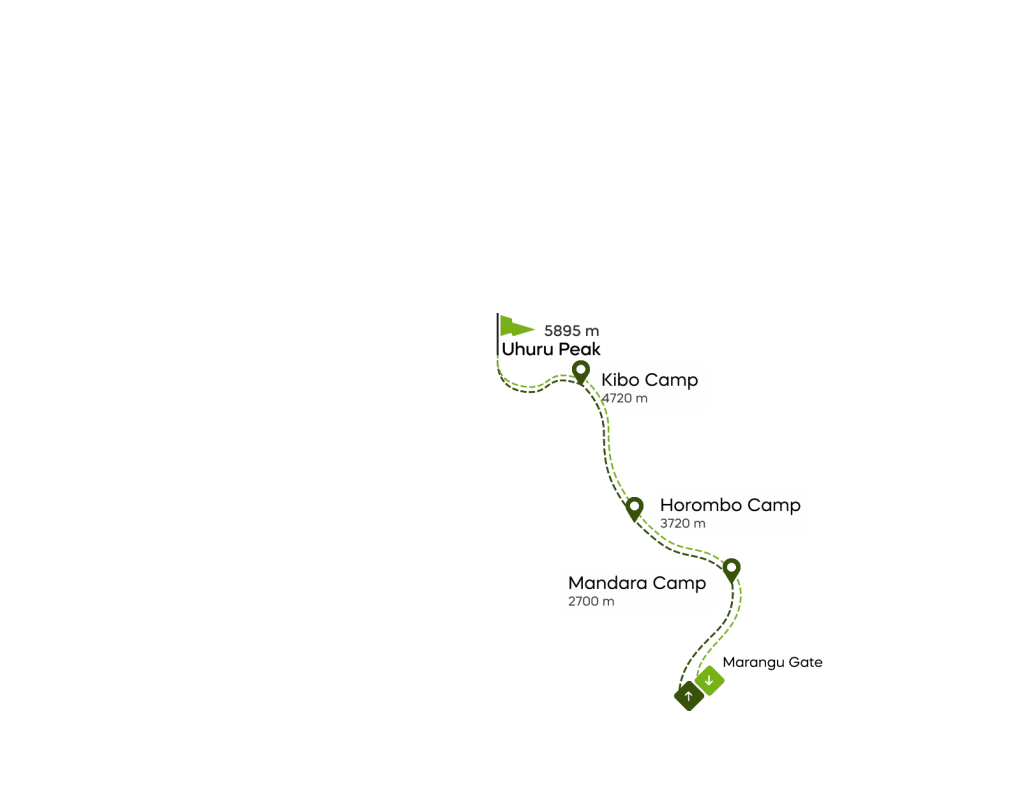
Referred to as the ‘Coca-Cola Route’, Marangu is the sole path that offers hut lodging. It features 5- or 6-day treks along a trail beginning on the Eastern slope. The huts are arranged in a dormitory style.
Advantages: Hut accommodations offer comfort; a more budget-friendly choice.
Disadvantages: The same trail is used for both ascent and descent, and a shorter duration can pose challenges for acclimatization.
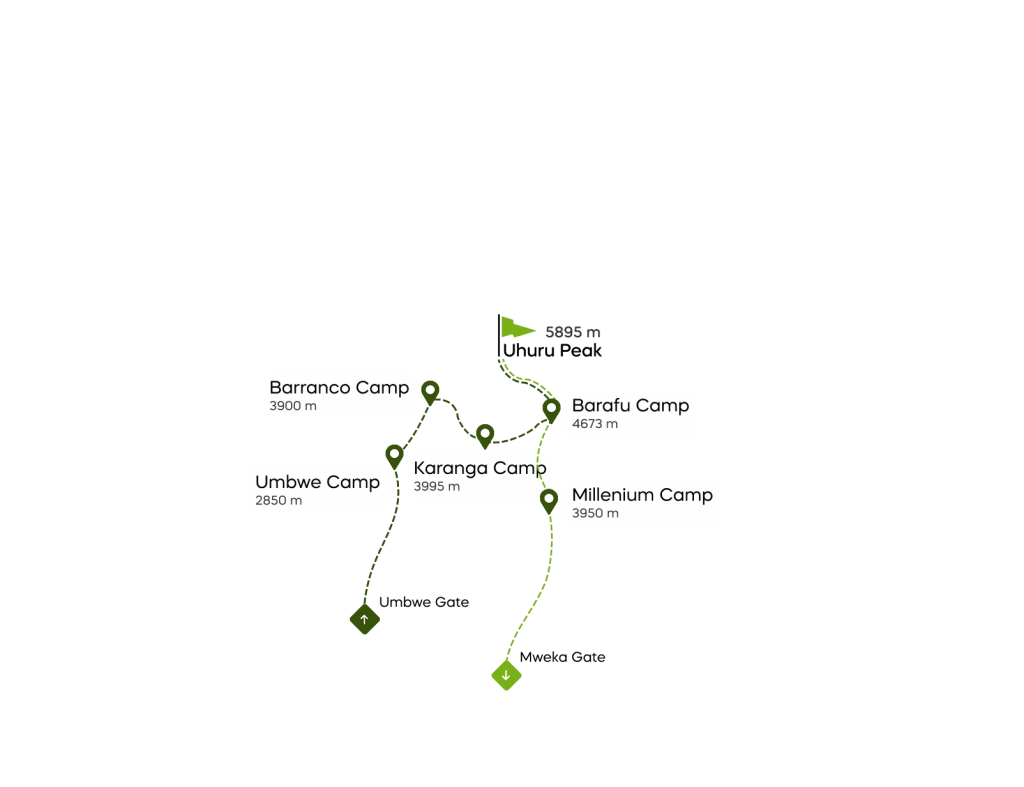
The Umbwe route, known for being the steepest and most straightforward, is ideal for seasoned trekkers looking for a challenge, with options for 6- or 7-day itineraries. Two days into the hike, it joins the Machame route.
Advantages: It’s the least crowded route, offering a challenging yet rewarding experience.
Disadvantages: The initial climb is quite steep, and the 6-day option is not advisable for novices.
The Northern Circuit is the most extensive and recently established route, featuring an 8-day trek that encircles the mountain. This path ensures excellent acclimatization and offers a sense of solitude.
Advantages:
– Higher likelihood of reaching the summit due to the gradual ascent.
– Stunning views with fewer people around.
Disadvantages:
– The longer duration results in increased expenses and time commitments.
– It requires good physical endurance.
Your safety starts before the climb begins. Always choose a travel insurance policy that covers:
High-altitude trekking (up to 6,000 m)
Emergency helicopter evacuation
Hospital care and medical expenses in Tanzania
Trusted insurers include Global Rescue, World Nomads, and IMG — each known for quick emergency response and adventure-specific coverage. Confirm your policy explicitly includes Mount Kilimanjaro before you travel.
The easiest and most direct way is to fly into Kilimanjaro International Airport (JRO), located between Moshi and Arusha.
From JRO, it’s a 45–60-minute drive to Moshi, the base for most climbs.
Main international airlines: KLM, Qatar Airways, Turkish Airlines, Ethiopian Airlines, and Air France.
Alternative routes:
From Dar es Salaam: Take a 1-hour domestic flight to JRO or a scenic day’s drive.
From Nairobi, Kenya: Bus or shuttle to Moshi (7 hrs), plus a $21 Kenyan transit visa.
Roots & Routes Africa can organize airport transfers, hotel stays, and local logistics for your full peace of mind.
Mount Kilimanjaro can be climbed year-round, but weather conditions shape your experience:
🌤️ January – March: Clear skies, mild weather, great visibility.
🌧️ April – mid-June: Long rains; quieter trails, lush scenery.
☀️ Mid-June – October: Peak trekking season — cool, dry, perfect for summit views.
🌦️ November – mid-December: Short rains, but still suitable for those preferring solitude.
For rainy months, the Rongai and Northern Circuit routes are drier and recommended.
It takes 5–10 days, depending on the route and pace:
5–6 days: Fast, lower success rate.
7–8 days: Best balance for acclimatization and success (~98% summit rate).
10+ days: Perfect for crater camp or relaxed pace routes like the Northern Circuit.
The more gradual your ascent, the higher your success and comfort.
No technical experience is required — Mount Kilimanjaro is a trekking peak, not a technical climb.
You’ll hike on established trails with professional guides, porters, and a full support team.
However, a good fitness level and mental endurance are essential. You should be comfortable hiking for 5–7 hours per day with moderate elevation gain.
Altitude sickness (AMS) is the main risk on Kilimanjaro. To minimize it:
Choose a 7–8-day route for gradual acclimatization
Stay hydrated and ascend slowly
Avoid alcohol and overexertion
Report any symptoms early — our guides monitor your oxygen levels and wellbeing daily
Proper pacing and professional guidance ensure a safe, successful climb.
Our team is always here to help